

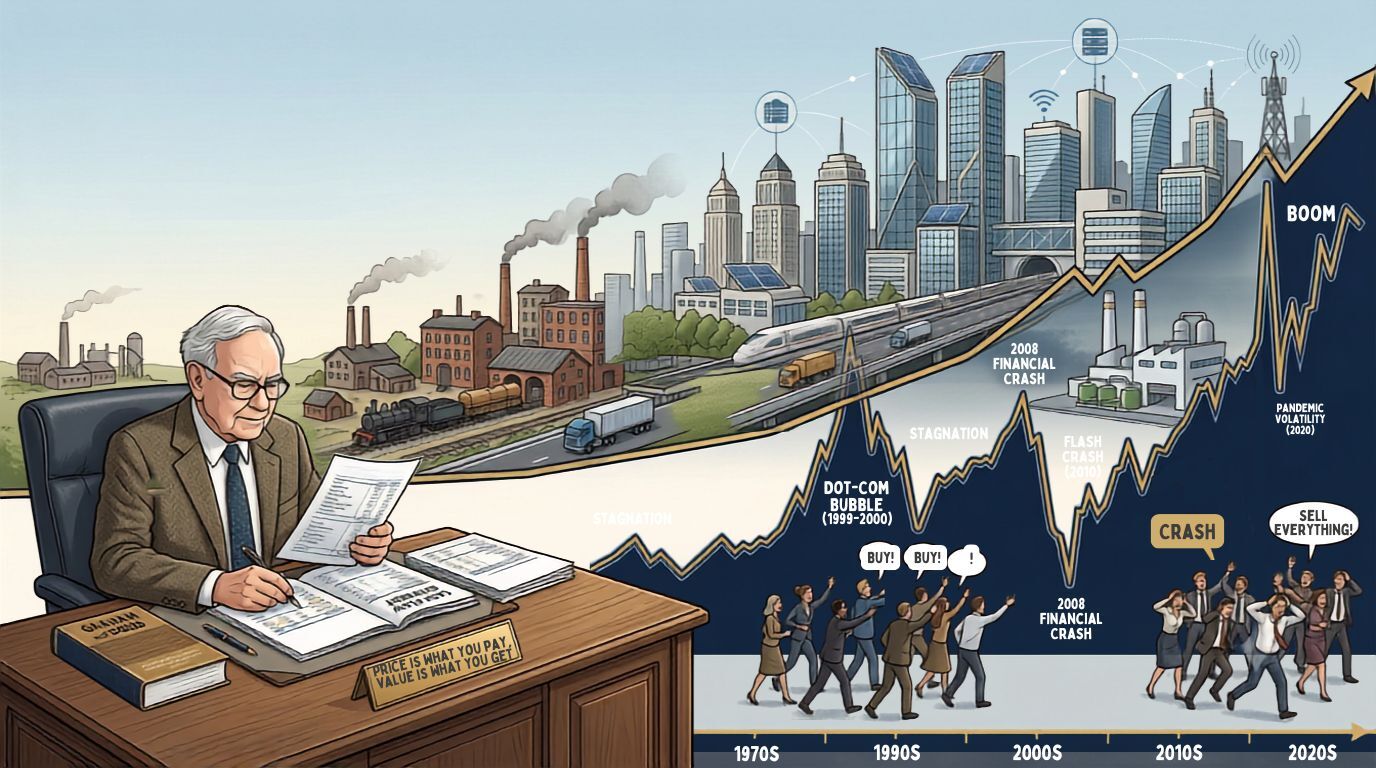
Warren Buffett’s central lesson is that the stock market does not move in lockstep with the economy. Throughout the 20th century, the U.S. economy made extraordinary progress, yet the market experienced long stretches of stagnation interrupted by relatively brief periods of dramatic gains. Buffett argues that this disconnect is driven largely by investor psychology. People tend to look in the rearview mirror, becoming more confident after prices rise and more pessimistic after they fall. That behavior often leads investors to buy when optimism is already high and avoid stocks when valuations are more attractive.
Buffett believes successful investing depends less on intelligence than on temperament. His story of “Mr. Moose,” who refused to buy a strong insurance company at a very low valuation because he believed stocks were no good, shows how recent market performance can overpower sound analysis. The same mistake appeared during the internet bubble, when investors assigned enormous valuations to businesses with little chance of producing enough profit to justify them. Buffett’s advice is simple: evaluate a stock as if you were buying the entire company, focus on the earnings and cash flow it can realistically produce, and resist the urge to follow the crowd.
